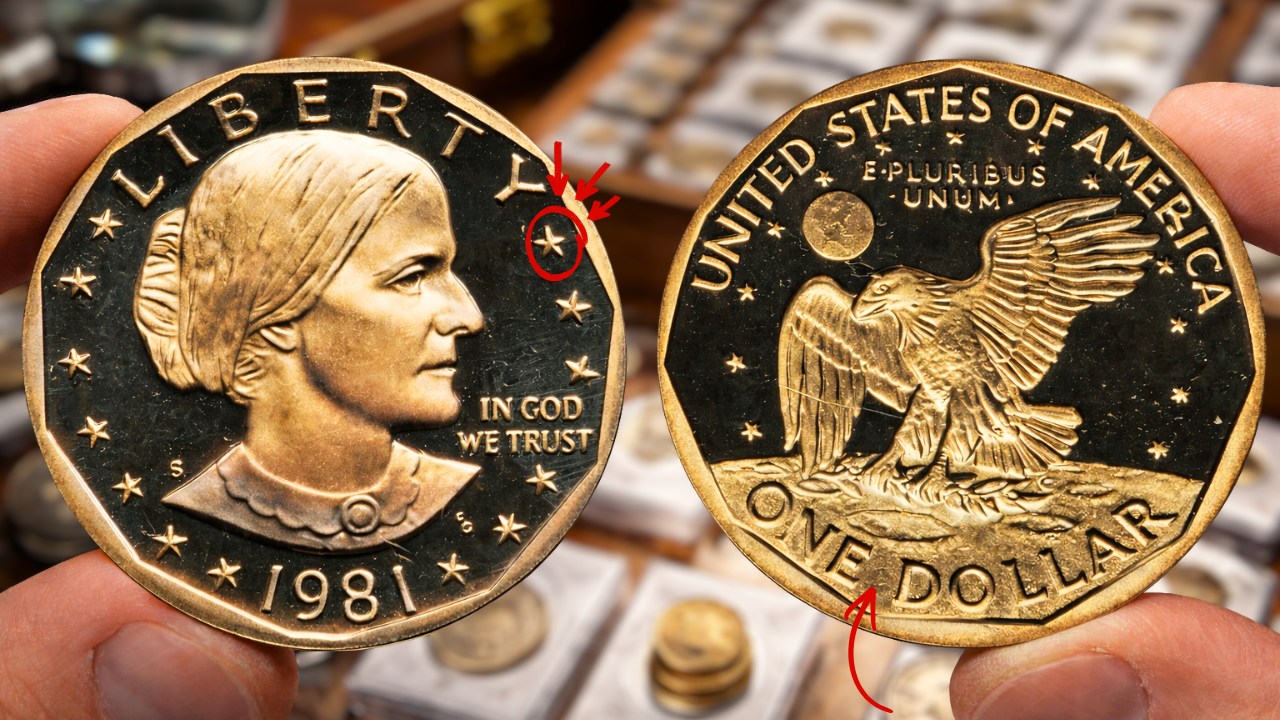
1981 Susan B. Anthony Dollar: The Susan B. Anthony dollar occupies a unique and often misunderstood place in U.S. coinage history. Introduced in 1979, it was the first circulating U.S. coin to feature a real woman rather than a symbolic figure. Despite this historic milestone, the coin’s life in everyday commerce was brief. By 1981, production was already winding down, largely due to public confusion with the quarter and a lack of enthusiasm from banks and retailers.
The 1981 issues are especially interesting because they were never intended for widespread circulation. By that point, demand for dollar coins had collapsed, and most pieces struck that year were produced specifically for collectors. That reality makes any 1981 Susan B. Anthony dollar found in circulation today feel like a small anomaly and potentially something more valuable than it appears.
Why 1981 Is Different From Other SBA Dollars
What separates 1981 Susan B. Anthony dollars from their 1979 and 1980 counterparts is intent. While earlier coins were minted for everyday use, the U.S. Mint officially sold 1981 dollars only in collector sets. No large-scale release into circulation was planned.
However, coins have a way of escaping their original paths. Over time, some 1981 dollars entered circulation through estate liquidations, broken-up mint sets, or simple mistakes at banks. Numismatic estimates suggest that roughly 880,000 of these coins may now be circulating in the wild a surprisingly high number given their original status as collector-only issues.
This unusual journey is what fuels today’s renewed interest and speculation.
Understanding the Three Mint Marks
The 1981 Susan B. Anthony dollar was struck at three different mints: Philadelphia, Denver, and San Francisco. Each carries its own level of scarcity and collector appeal.
Philadelphia and Denver coins are scarce in circulation because mint sets from those facilities were the primary source. San Francisco issues are even more distinctive, as they were produced in both proof and uncirculated formats, with proofs being far more common overall. Finding a San Francisco–minted 1981 dollar in everyday change would be exceptionally rare and worth a closer look.
Mint marks matter greatly in determining value, so checking the small letter above the date is an essential first step.
Condition Is the Real Game-Changer
For collectors, condition is everything. Most 1981 Susan B. Anthony dollars were carefully stored in mint packaging, which means pristine examples still exist in large numbers. Coins that entered circulation, however, often show wear, bag marks, or surface scratches.
Ironically, circulated examples can be more intriguing than flawless ones because they tell a different story. Still, from a market perspective, high-grade uncirculated coins typically command higher prices. Coins graded at the top levels by professional services can sell for many times their face value, particularly if they show sharp strikes and clean surfaces.
Even modest wear can significantly affect price, making proper evaluation critical before selling or buying.
How Much Are These Coins Actually Worth?
Despite headlines suggesting hidden treasure, most 1981 Susan B. Anthony dollars are not worth a fortune. Common uncirculated examples often trade for modest premiums, especially if they are still plentiful in mint sets. However, certain high-grade coins and specific mint mark combinations can bring substantially more.
Proof coins, especially those with deep cameo contrast, tend to attract steady collector interest. Circulated coins usually sell for smaller amounts, but their novelty can still add value beyond face value, especially to collectors completing date-and-mint sets.
The key takeaway is that while not every coin is a jackpot, some are absolutely worth more than a dollar and a few can be surprisingly valuable.
Why Collectors Are Paying Attention Again
The Susan B. Anthony dollar has long lived in the shadow of more popular U.S. coins, but that may be changing. As collectors increasingly explore modern and overlooked series, interest in late-20th-century coinage has grown. The 1981 issues sit at the intersection of low mintage, unusual distribution, and historical significance.
The idea that hundreds of thousands of collector-only coins are now quietly circulating adds a layer of intrigue. It creates a modern-day treasure hunt that appeals not only to seasoned numismatists but also to casual coin roll hunters and everyday consumers.
In a hobby driven by stories as much as metal, the 1981 SBA dollar has a compelling one.
How to Check Your Change the Right Way
If you think you might have an 1981 Susan B. Anthony dollar, resist the urge to clean it. Cleaning can permanently damage the coin’s surface and drastically reduce its value. Instead, handle it gently by the edges and store it in a protective holder.
Look closely at the date and mint mark, then assess overall condition. If the coin appears unusually sharp or well-preserved, a professional appraisal or third-party grading service may be worthwhile. Even if the coin turns out to be common, the process can be a rewarding introduction to coin collecting.
Sometimes, the real value lies in the experience of discovery.
A Modest Coin With a Big Story
The 1981 Susan B. Anthony dollar is not a guaranteed windfall, but it is far from ordinary. Its short production run, collector-only origins, and quiet migration into circulation make it one of a handful of modern U.S. coins that still spark genuine curiosity.
Whether you see it as a potential investment, a historical artifact, or simply an interesting piece of pocket change, the coin invites a second look. In an age where most money is digital, finding a small, tangible reminder of an overlooked chapter in American coinage can feel like uncovering a hidden treasure even if it’s only worth a little more than a dollar.