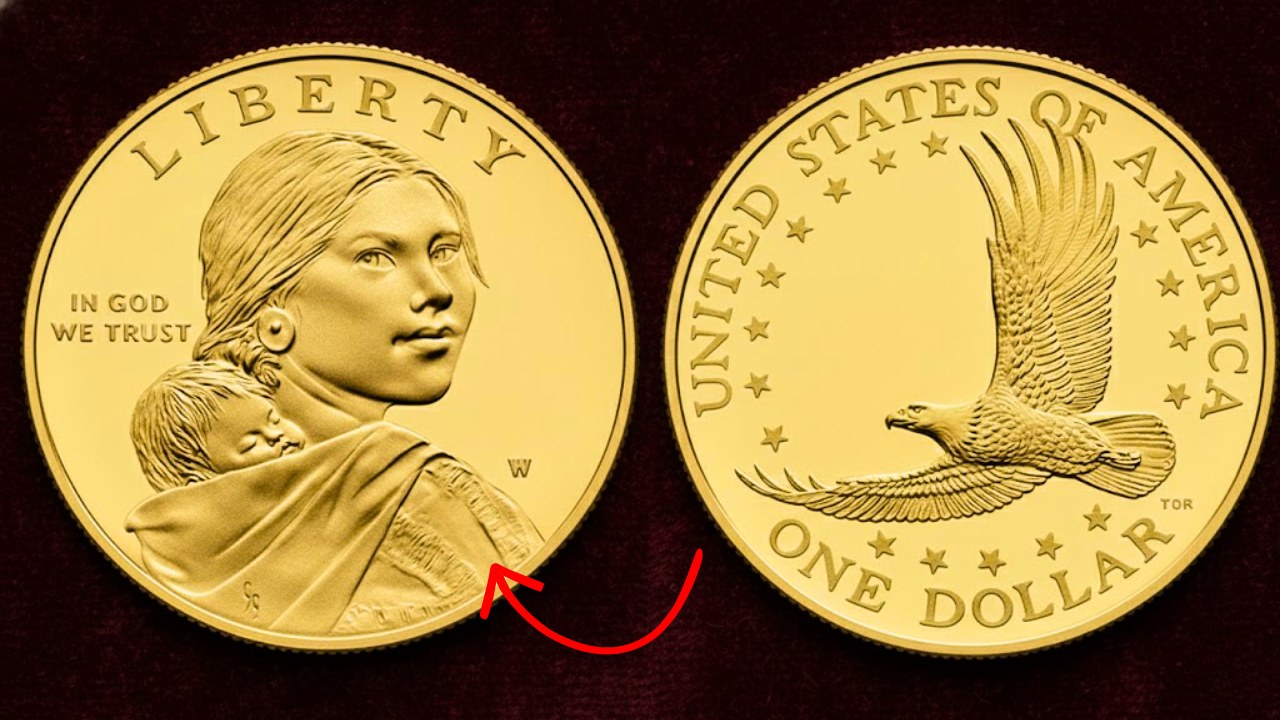
Sacagawea Dollar: The Sacagawea dollar has quietly become one of the most fascinating modern U.S. coins. While most people still think of it as a common golden dollar worth face value, collectors know that certain rare versions and minting mistakes can be extremely valuable. Over the years, rumors and headlines have circulated about Sacagawea dollars selling for enormous sums, including figures as high as $2.1 million. As we move into 2026, interest in these coins continues to grow, especially around error varieties and how to identify them correctly.
Sacagawea Dollar Series
The Sacagawea dollar was first issued in 2000 to replace the unpopular Susan B. Anthony dollar. It features Sacagawea, the Shoshone woman who helped guide the Lewis and Clark expedition, on the obverse, with a soaring eagle on the reverse for early issues.
From the start, the coin had limited circulation. Many examples were saved rather than spent, which means most standard Sacagawea dollars are still very common today. However, within this modern series are a few extraordinary minting errors and experimental strikes that separate ordinary coins from elite collectibles.
Why People Talk About a $2.1 Million Sacagawea Dollar
The idea of a $2.1 million Sacagawea dollar comes from the extreme upper end of coin collecting, where unique or near-unique errors can command life-changing prices. These valuations are not based on normal circulated coins, but on pieces with multiple rare factors combined, such as being a wrong-planchet strike, a mule coin, or an undocumented mint experiment.
In most cases, these figures represent theoretical or private sale estimates rather than everyday auction results. Still, history has shown that when a previously unknown error appears and is authenticated, prices can reach astonishing levels, especially if the coin is one of a kind.
Most Valuable Sacagawea Dollar Error Varieties
Several error types dominate serious collector interest. Understanding these is essential for anyone hoping to identify a high-value coin.
Mule Errors
A mule coin is struck using mismatched dies, meaning the obverse and reverse were never meant to go together. One of the most famous Sacagawea-related errors is the Sacagawea obverse paired with a Washington quarter reverse. These coins are genuine U.S. Mint mistakes and are incredibly rare.
Authentic examples have sold for six figures, and if a previously unknown variation were discovered, it could push values even higher in the future.
Wrong Planchet Errors
Wrong planchet errors occur when a coin is struck on a blank intended for another denomination or metal type. Sacagawea dollars struck on quarter planchets or experimental metal compositions are among the most desirable finds.
These coins often appear slightly underweight or have an unusual color. When confirmed by professional grading services, they can be worth tens of thousands of dollars or more.
Cheerios Dollar Reverse Detail
In early 2000, a small number of Sacagawea dollars were included in Cheerios cereal boxes as a promotion. These coins feature enhanced tail feather details on the eagle, different from standard circulation strikes.
Many people still own these coins without realizing their significance. High-grade examples with clear feather details can bring substantial premiums compared to regular issues.
Off-Center and Broadstrike Errors
While less dramatic than mule or wrong planchet errors, extreme off-center strikes and broadstrikes can still be valuable, especially if the date and mint mark remain visible.
Most minor misalignments are common and inexpensive, but dramatic errors with strong eye appeal can attract serious collector attention.
How to Identify a Potentially Valuable Sacagawea Dollar
The first step is careful visual inspection. Look closely at weight, color, strike quality, and design details. Any unusual feature should raise curiosity rather than immediate excitement.
A digital scale and calipers are useful tools for checking weight and diameter against official specifications. Differences, even small ones, can indicate a wrong planchet or experimental strike.
Next, compare the coin to verified images of known errors. Many valuable Sacagawea dollars look normal at first glance, with differences only noticeable when viewed side by side with standard examples.
The Importance of Professional Authentication
No Sacagawea dollar reaches high value without third-party authentication. Professional grading services like PCGS or NGC are essential for confirming legitimacy and assigning a market grade.
Uncertified coins, no matter how unusual they appear, will always sell for less and may be dismissed entirely by advanced collectors. Authentication also protects owners from counterfeit or altered coins, which are increasingly common in the modern market.
Market Trends and 2026 Outlook
As of 2026, interest in modern U.S. error coins remains strong. Younger collectors are entering the hobby, and online platforms have made rare discoveries more visible than ever. This environment favors truly unique Sacagawea dollar errors.
However, it is important to separate realistic expectations from internet hype. The vast majority of Sacagawea dollars are worth only face value. Only a tiny fraction qualify for elite status, and even fewer could ever approach million-dollar valuations.
Final Thoughts
The Sacagawea dollar proves that modern coins can still hold incredible surprises. While a $2.1 million example would represent an extraordinary discovery, the real excitement lies in understanding what makes these coins special and knowing how to identify them properly.
Collectors who take time to learn error varieties, verify their finds, and stay grounded in market reality stand the best chance of uncovering something truly remarkable. Even if the coin turns out to be common, the knowledge gained is part of what makes coin collecting rewarding.