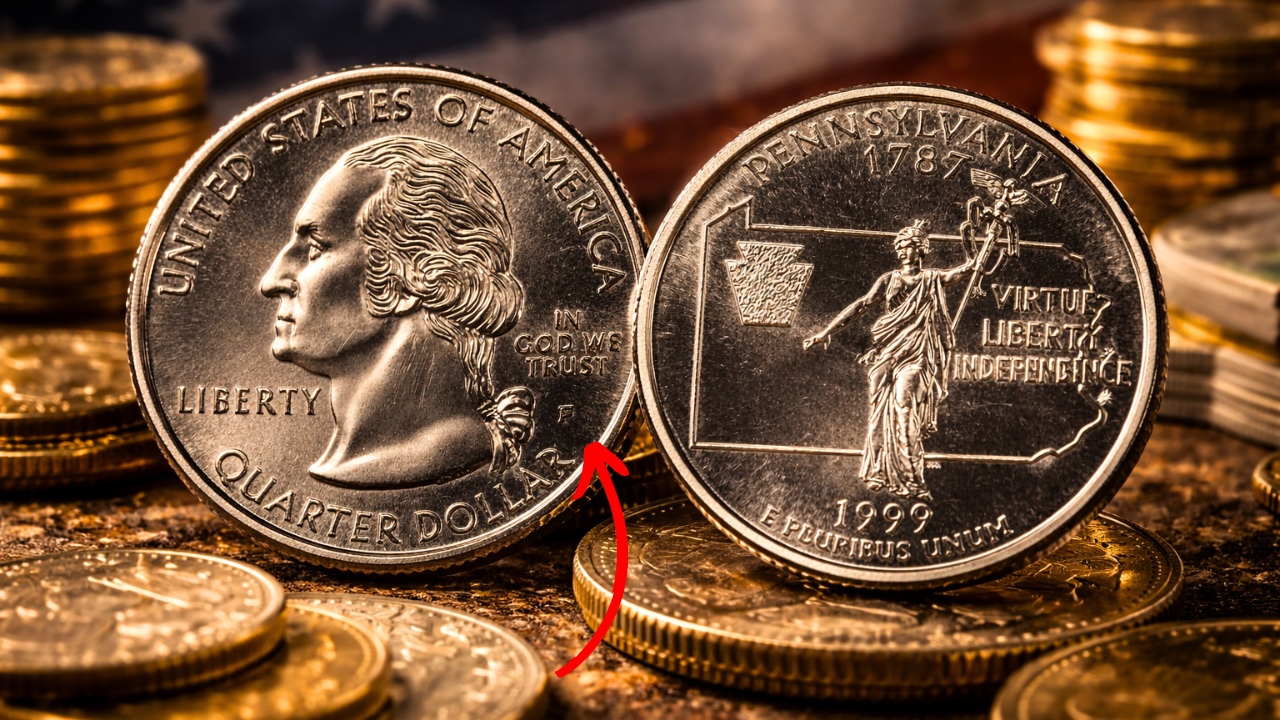
2026 State Quarters Value: State Quarters remain one of the most approachable and intriguing areas of U.S. coin collecting, even decades after the program officially ended. As of 2026, renewed interest from both seasoned numismatists and casual collectors has brought fresh attention to the values, varieties, and surprising discoveries hidden within this modern coin series. What began as an educational initiative has evolved into a legitimate collecting field where certain quarters can be worth far more than their face value.
A Brief Look Back at the State Quarters Program
The 50 State Quarters Program ran from 1999 through 2008 and released five new designs each year, honoring the states in the order they joined the Union. For the first time in generations, Americans actively checked their pocket change, hoping to complete a full set. Billions of quarters were struck, making most examples extremely common today.
However, high mintages do not mean the series lacks rarity. While standard circulated coins usually hold only face value, a small percentage escaped the mint with unusual characteristics. Errors, die varieties, and exceptionally well-preserved examples are what continue to drive collector demand in 2026.
Why Some State Quarters Are Worth More in 2026
The value of modern coins is driven less by age and more by scarcity and condition. State quarters follow this rule closely. Coins become desirable when something sets them apart from the millions of normal examples. That distinction may come from a minting mistake, a die flaw, or an unusually high grade that survived years of circulation.
Another factor influencing value in 2026 is attrition. Many state quarters have been lost, damaged, or worn beyond collectible condition. As pristine examples become harder to find, collectors are increasingly willing to pay premiums for top-quality pieces, especially those certified by professional grading services.
The Most Notable High-Value State Quarters
Among the hundreds of millions of quarters struck, a few specific issues have earned legendary status in modern numismatics. These coins are actively sought after and continue to command strong prices.
The 2004 Wisconsin quarter with the extra leaf error remains the most famous example. Struck at the Denver Mint, these quarters display an additional leaf on the corn stalk, either positioned high or low. The error is bold, easy to recognize, and genuinely scarce. In 2026, well-preserved examples often sell for hundreds of dollars, with top-grade certified coins reaching much higher levels.
Another standout is the 1999 Delaware quarter. Certain examples show doubled details or a die crack near the horse’s mouth, often nicknamed the “spitting horse” variety. As the first state quarter ever released, Delaware errors hold both historical and collector appeal. High-grade examples remain in strong demand.
The 2005 Kansas quarter featuring the “In God We Rust” error is also popular. This occurred when grease filled part of the die, causing the word “Trust” to appear partially missing. While not extremely rare, the error’s visual impact and memorable nickname make it a favorite among collectors.
Lesser-Known Errors That Still Matter
Not all valuable state quarters are instantly obvious. Some varieties require closer inspection but still carry meaningful premiums in 2026.

The 2005 Minnesota quarter is known for its extra tree line varieties, created by die doubling or cracking. These lines appear among the trees in the background and vary in intensity. Strong examples are more desirable, especially in uncirculated condition.
Off-center strikes are another category collectors watch closely. These occur when the coin blank is not properly aligned during striking. State quarters from various years and states have been discovered with dramatic off-center errors, sometimes missing part of the design. The more visible the error and the better the condition, the higher the value tends to be.
Clipped planchets, broad strikes, and partial collar errors also appear across the series. While many are modestly priced, extreme or visually striking examples can still draw strong interest.
The Role of Condition and Grading
Condition is everything in modern coin collecting, and state quarters are no exception. Because the coins are relatively recent, collectors expect high levels of detail and minimal wear. Coins graded in Mint State condition are significantly more valuable than circulated examples, even when the design itself is common.
Professional grading has become especially important by 2026. Certified coins provide assurance of authenticity, accurate grading, and error attribution. For rare varieties like the Wisconsin extra leaf or major doubled dies, certification often makes the difference between a coin being overlooked and commanding a premium price.
Even non-error quarters can be valuable if they achieve exceptionally high grades. Some early state quarters in near-perfect condition are far scarcer than most people realize, simply because few were saved before circulation took its toll.
How Collectors Are Finding Rare Quarters Today
Despite the rise of online auctions and coin marketplaces, many collectors still enjoy the hunt. Searching through bank rolls remains a popular and affordable way to look for overlooked treasures. Careful inspection with proper lighting and magnification is essential, as many errors are subtle.
Coin shows and local shops also play an important role. Dealers often have bulk state quarters that haven’t been fully examined, creating opportunities for knowledgeable collectors. Staying informed about known varieties and learning how to spot them is key to success.
Equally important is patience. Rare state quarters are not found every day, but consistent searching increases the odds. Many of today’s most valuable examples were discovered years after their release by collectors who knew what to look for.
The Long-Term Outlook for State Quarters
As 2026 progresses, interest in state quarters shows no sign of fading. The series represents a unique moment in U.S. coinage history, blending accessibility with genuine collecting challenges. While most quarters will always remain common, the rare exceptions continue to gain recognition and respect within the hobby.
For new collectors, state quarters offer an ideal entry point. For experienced numismatists, they provide an opportunity to specialize in errors, varieties, and high-grade examples. With fewer pristine coins remaining each year, the best pieces are likely to remain desirable well into the future.
State quarters may have started as pocket change, but for collectors who know what to look for, they continue to offer discovery, history, and the thrill of finding something truly special.