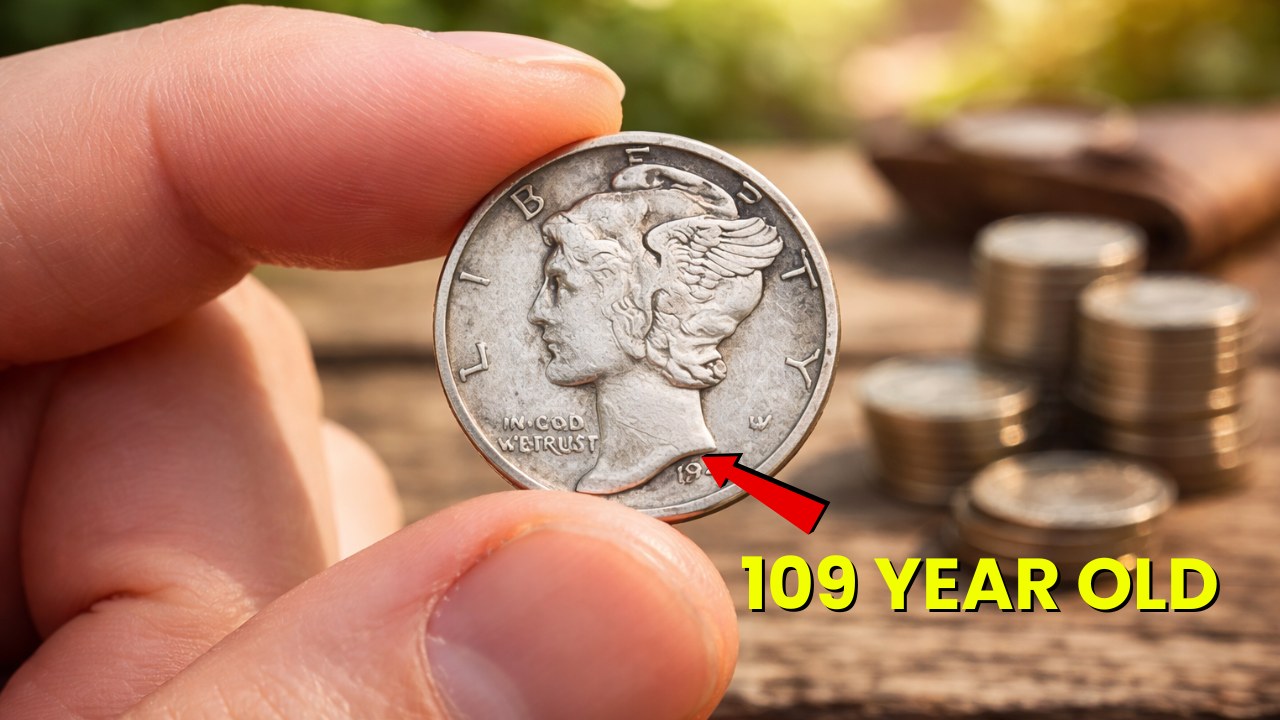
109-Year-Old Mercury Dime: Coins can seem like ordinary objects, tucked away in drawers, forgotten in collections, or passed down through generations without much thought. Every now and then, however, the coin world is shaken by a discovery that reminds collectors and the public alike just how valuable these small pieces of history can be. Recently, a 109-year-old Mercury dime stunned the numismatic community by commanding an astonishing price of $1.1 million at auction. This remarkable event has sparked excitement and curiosity among collectors, historians, and anyone fascinated by rare coins.
The Mercury dime, officially known as the Winged Liberty Head dime, was designed by Adolph A. Weinman and first issued in 1916. Its elegant design and historical significance have made it a favorite among coin enthusiasts for more than a century. Yet few expected one to ever reach such a staggering value. To understand why this particular 1916 dime made headlines, it’s important to explore the coin’s history, what makes it so rare, and why collectors are willing to pay extraordinary amounts for select examples.
The Legacy of the Mercury Dime
When the Mercury dime was introduced in 1916, it was part of a broader redesign of United States coinage that included new imagery and artistic styles. The obverse features a youthful depiction of Liberty wearing a winged cap, symbolizing freedom of thought. Many people mistakenly refer to the figure as the Roman god Mercury, which is how the coin gained its popular name.
These dimes were minted from 1916 until 1945, making them a mainstay of daily commerce for decades. During this period, millions were struck, and most circulated widely. Because of their silver content and aesthetic appeal, Mercury dimes became a staple for both investors and collectors. Despite their original circulation use, many were saved by early collectors, helping preserve high-grade examples that are rare today.
What Makes the 1916 Dime So Rare
Not all Mercury dimes are created equal. Among the entire series, the 1916 issue from the Philadelphia Mint is one of the most elusive in top condition. While it is not the rarest date in terms of mintage numbers, very few specimens survived in exceptional grades because most were heavily used in everyday transactions.
Coins that are well preserved from this era are scarce, and the market for high-grade early Mercury dimes has been steadily increasing for years. Collectors pay premiums for coins with strong eye appeal, sharp detail, and original surfaces. The 1916 dime that recently sold for $1.1 million was exceptional in all of these respects.
Experts agree that the combination of age, historical significance, and condition is what drives such high values. In the case of this particular example, its near-perfect state and vibrant luster set it apart from thousands of others that have been graded and traded in the past.
The Auction That Shocked Collectors
The sale of the 1916 Mercury dime took place at a major auction event that attracts serious collectors and dealers from around the world. When the coin was brought up for bid, expectations were already high because it had been authenticated and graded by a respected third-party grading service. As the bidding unfolded, it quickly became clear that this was no ordinary sale.
Collectors pushed the price higher and higher, with competitive bids driving the final amount to an astonishing $1.1 million. This result not only surprised many in attendance, but it also caught the attention of numismatic media outlets and hobbyists who follow rare coin markets closely.
Auctions like this serve as benchmarks for the value of other coins in the same series, and they often ignite renewed interest in collecting and investing in rare pieces. The success of this sale has already prompted increased inquiries and activity surrounding high-grade Mercury dimes and other early 20th-century coins.

Why Collectors Are Flocking to Classic Coins
There are several reasons why coins like the 1916 Mercury dime are in such strong demand. One key factor is scarcity. As time passes, fewer high-quality specimens remain available, particularly for coins that were originally minted for circulation. Wear, damage, and loss have removed many coins from the market entirely, leaving only a select few in pristine condition.
Another important influence is the historical and artistic value of classic coinage. Designs like the Mercury dime represent a bygone era of American coinage, when artists were given significant creative freedom. This has made them beloved not just by numismatists, but also by anyone who appreciates fine art and history.
The broader collectible market has also been heating up in recent years. Investors seeking tangible assets have turned to alternative collectibles such as coins, rare books, and memorabilia. In times of economic uncertainty, tangible assets with long-term appeal often attract interest, and high-end coins fit this profile.
Tips for People Interested in Collecting Rare Dimes
If the story of the million-dollar dime has inspired you to explore coin collecting, there are a few things to keep in mind. First, education is essential. Learn about the history of the coins you are interested in and the factors that determine value. Resources such as coin guides, collector forums, and reference books can help you develop a solid foundation.
Condition is one of the most important elements in grading a coin’s value. Coins are graded on a scale that reflects their state of preservation, from worn pieces to mint-state examples that show no signs of circulation wear. Grading can be subjective, so many collectors choose to have their coins evaluated by well-known third-party grading services to ensure accuracy and credibility.
It’s also wise to build relationships with reputable dealers and fellow collectors. They can offer insights, help you avoid common pitfalls, and point you toward worthwhile acquisitions.
Finally, always collect what you enjoy. While the high-end market can be thrilling, numismatics is a hobby that rewards passion and patience just as much as it does financial investment.
What This Sale Means for the Future of Coin Collecting
The extraordinary sale of a 109-year-old Mercury dime for $1.1 million is a reminder of the deep and enduring appeal of rare coins. It highlights the importance of condition, historical context, and collector enthusiasm. For the broader collecting community, it serves as both inspiration and validation that rare coins remain valuable and exciting assets.
Whether you are just starting your collection or you’ve been part of the hobby for years, this milestone event underscores the possibility that even modest coins from the past can one day make a monumental impact in the present.