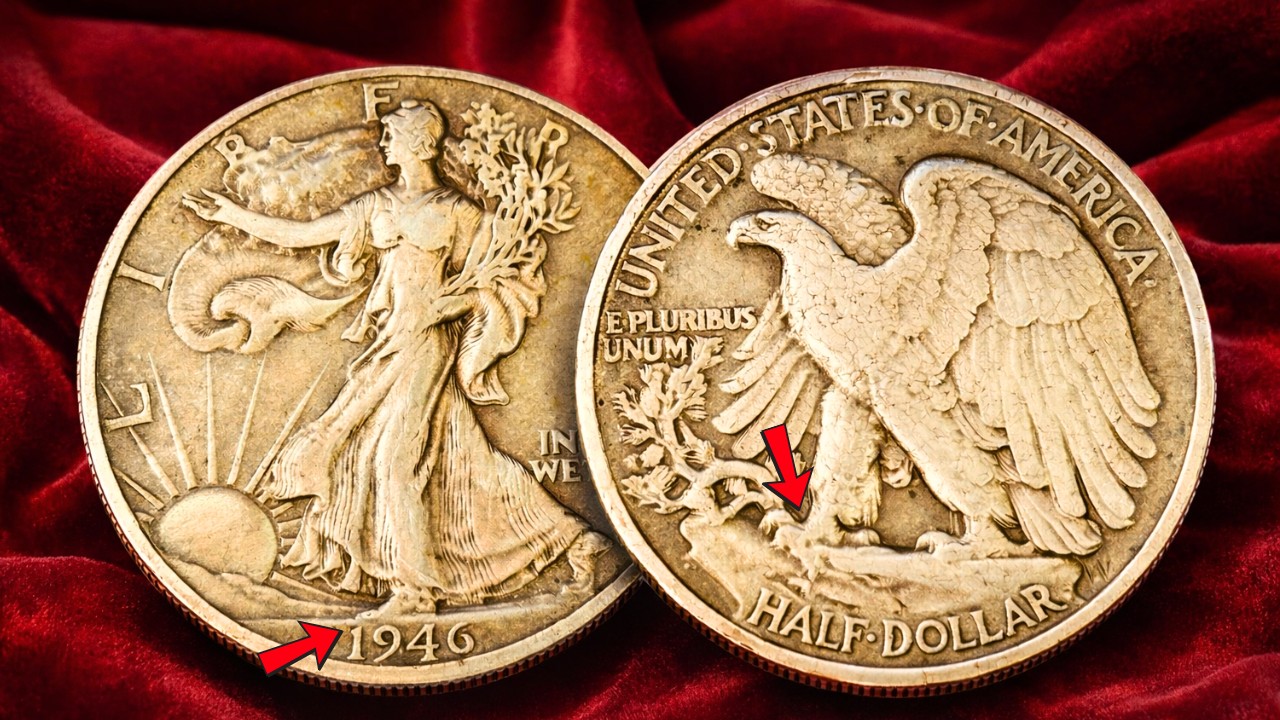
1917 Walking Liberty Half Dollar: The world of coin collecting is full of surprises, and the 1917 Walking Liberty half dollar is one of the most exciting discoveries in recent years. While most coins from this era trade hands for modest sums, a handful of exceptional 1917 Walking Liberty halves have sold or are estimated to be worth up to $175,000. This has sparked renewed interest among collectors and investors alike.
A Brief History of the Walking Liberty Half Dollar
The Walking Liberty half dollar was designed by renowned sculptor Adolph A. Weinman and first minted in 1916. It remained in production until 1947, making it one of the most beloved coin series in American numismatics. The obverse features Lady Liberty striding confidently toward the sunrise, draped in the American flag, while the reverse depicts a majestic eagle perched on a rock.
Collectors prize this series for its artistic design and historical significance, capturing a period of American optimism and growth. The 1917 issue, in particular, plays a key role in the series’ early development, with several interesting varieties and relatively low survival of high-grade examples compared with later dates.
Why the 1917 Walking Liberty Half Dollar Is Valuable
Several factors contribute to the strong value of certain 1917 Walking Liberty half dollars. Rarity, condition, historical appeal, and strong collector demand all combine to make some coins exceptionally marketable. Unlike many modern coins where error varieties dominate the headlines, the 1917 Walking Liberty’s value is driven primarily by traditional numismatic factors.
First, mintages in 1917 were comparatively lower than many later dates in the series, and survival rates for high-grade coins are limited. Second, the coin’s age means that many examples in circulation suffered wear, making mint state specimens rare. Finally, collectors place a premium on coins with striking visual appeal, solid eye appeal, and original surfaces free from damage.
Key Varieties of the 1917 Half Dollar
Collectors differentiate several varieties of the 1917 Walking Liberty half dollar, and these distinctions can affect value significantly.
1917 Without Mint Mark
The Philadelphia Mint produced a large number of 1917 half dollars without a mint mark. While many of these coins exist in lower grades, high-grade uncirculated examples are far scarcer. Examples graded MS65 or higher by reputable grading services often command strong premiums.
1917-D Denver Mint
The 1917-D half dollar, struck at the Denver Mint, is considered rarer in high grades than the Philadelphia issue. Denver Mint coins from this early period have lower mintages and comparatively fewer coins surviving in pristine condition. High-grade 1917-D halves, especially those graded MS66 or above, are among the most valuable in the series.
1917-S San Francisco Mint
The 1917-S half dollar, produced at the San Francisco Mint, rounds out the major 1917 issues. Like the Denver variety, it is often more challenging to find in high grades compared with the Philadelphia coins. Collectors prize well-preserved specimens, and examples graded MS65 or higher can fetch strong prices.
What Drives a $175,000 Valuation
When collectors talk about 1917 Walking Liberty half dollars reaching values of $175,000, they are referring to exceptional, top-population coins typically in mint state condition with eye-catching luster and flawless or near-flawless surfaces. Several key factors influence these high valuations.
Condition and Grade
Condition is paramount in coin valuation, and for the 1917 Walking Liberty half dollar, the difference of a single grade level can mean thousands or tens of thousands of dollars. Coins graded MS67 or higher by professional services such as PCGS or NGC are extremely rare. An MS68 coin, for example, may be one of only a handful known, driving collectors to bid aggressively.
Eye Appeal
Beyond the numerical grade, dealers and collectors pay close attention to eye appeal. A coin with vibrant original toning, strong strike details, and no distracting marks can stand out even within a high-grade category. These aesthetic qualities can elevate a coin’s desirability and overall market value.
Population Reports
Certification services maintain population reports that list how many coins of a given grade exist. Low population numbers at the highest grades create scarcity. For 1917 Walking Liberty half dollars, coins in the top tiers of grading are extremely limited, which supports high valuations at auction.
Historic Market Comparisons
Past auction results play a big role in shaping current expectations. When a rare coin has sold for a high price publicly, that sale establishes a benchmark that influences future pricing for comparable examples. A $175,000 sale record for a 1917 Walking Liberty half dollar puts similar coins in the spotlight and validates strong market interest.
How to Identify Valuable 1917 Half Dollars
If you have a 1917 Walking Liberty half dollar, here are some tips to assess its potential value:
Examine the coin’s condition carefully. Look for sharp details on Liberty’s figure, clear feathers on the eagle, and minimal surface wear.
Check for mint marks. The D (Denver) and S (San Francisco) mint marks are located on the reverse, just below the left of the eagle’s tail feathers.
Avoid cleaning the coin. Cleaning can damage the surface and dramatically reduce value.
Consider professional grading. Submission to a respected grading service can authenticate and grade the coin, often increasing buyer confidence and value.
Consult recent auction records. Comparing your coin to recent sales of similar grade and variety can give you a realistic sense of its market value.
Recent Market Trends
The coin market as a whole has seen notable shifts over the past few years, with increased interest in vintage and key-date coins. Collectors have been seeking material that combines historical significance with scarcity, and the Walking Liberty series fits that profile. While economic conditions can influence collecting trends, rare coins with deep historical roots often retain appeal even during market fluctuations.
For the 1917 Walking Liberty half dollar, strong auction results for high-grade examples have reinforced demand. Dealers report that serious collectors are actively seeking these coins, particularly for key dates and exceptional grades.
Tips for Collectors and Investors
Educate yourself about the series. Understanding the subtle differences between varieties and what constitutes a high-grade coin is essential.
Handle coins properly. Always hold by the edges to avoid fingerprints or damage.
Use reputable dealers and graders. Working with professionals you trust can help avoid counterfeits and overgrading.
Stay informed about market trends. Following auction results and collector discussions helps you gauge true value.
Be patient. Rare coins often take time to find the right buyer willing to pay top dollar.
Final Thoughts
The 1917 Walking Liberty half dollar stands as a testament to the rich history and enduring appeal of American coinage. While most examples remain modest in value, the rarest and most pristine specimens have captured the attention of collectors with valuations reaching up to $175,000.
Whether you are a seasoned numismatist or a casual enthusiast, the story of the 1917 Walking Liberty half dollar offers a fascinating glimpse into the intersection of art, history, and marketplace dynamics. Taking the time to understand what makes these coins special could reveal treasures you never knew you had.