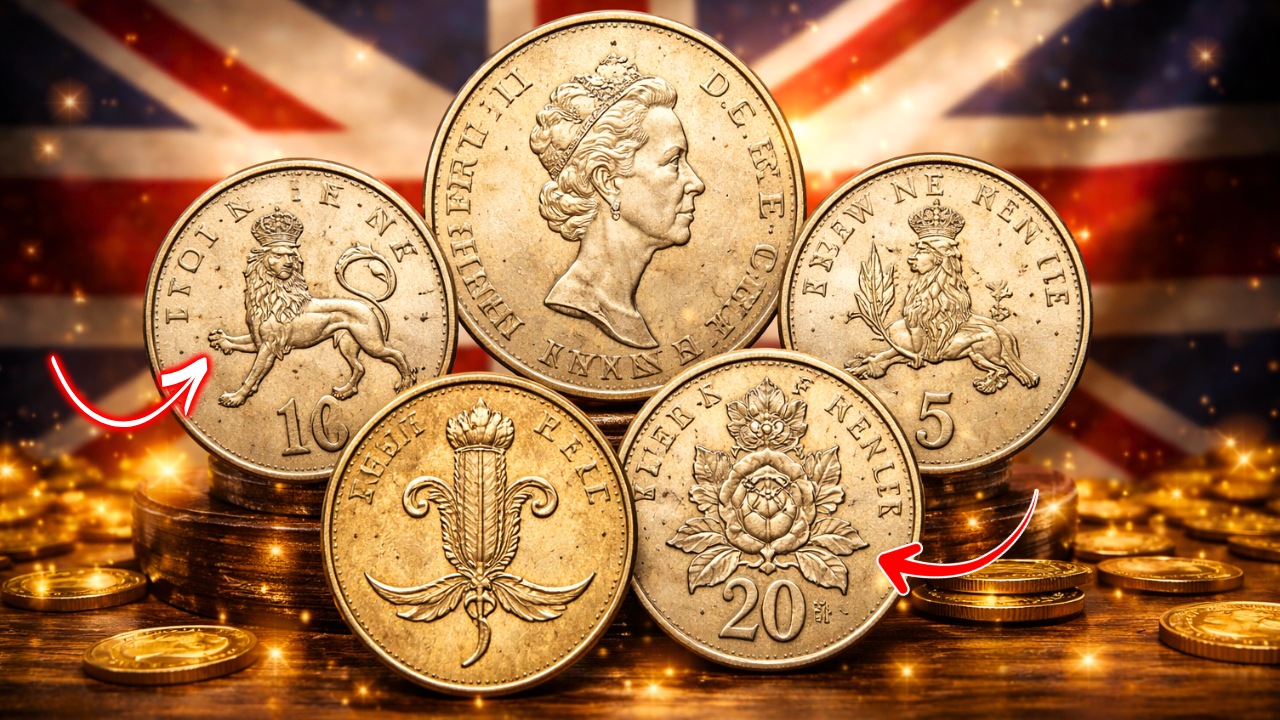
UK Elizabeth New Pence Coins: The introduction of decimal coinage in the UK in 1971 marked one of the most important changes in British monetary history. For millions of people, the old pounds, shillings, and pence system disappeared overnight, replaced by a simpler decimal format. To help the public adjust, Britain’s new coins carried the inscription “New Pence,” a wording that remained in use until the mid-1980s during the reign of Queen Elizabeth II.
While most of these coins were produced in huge numbers and remain common today, a small handful stand out as exceptionally rare and highly valuable. Errors, limited proof strikes, and unusual production circumstances have turned some Elizabeth II New Pence coins into prized collectibles. Below are five of the most valuable examples that continue to excite collectors and investors alike.
1983 Two Pence “New Pence” Mule
This coin is widely regarded as the holy grail of modern British decimal coinage. In 1983, the Royal Mint officially replaced the “New Pence” inscription with “Two Pence.” However, a tiny number of coins were accidentally struck using the old reverse design that still read “New Pence.”
What makes this coin extraordinary is that no regular circulation Two Pence coins were meant to be produced in 1983 at all. Only proof sets were issued, making any circulation strike a major anomaly. As a result, the 1983 Two Pence New Pence mule is exceptionally rare, with only a handful of confirmed examples known to exist.
Collectors have paid staggering sums for authentic specimens. Depending on condition, this coin can fetch anywhere from £20,000 to over £50,000, making it one of the most valuable decimal coins ever produced in the UK.
1971 Two Pence Proof Coin
The year 1971 holds special significance as the first year of decimal currency in Britain. Proof coins from this inaugural year were struck to a much higher standard than circulation pieces, featuring sharp details and mirror-like fields.
The 1971 Two Pence proof coin is especially desirable because it represents the very beginning of the New Pence era. These coins were never intended for everyday use and were only available as part of official proof sets, which were produced in relatively limited quantities.
High-grade examples with flawless surfaces and original packaging can command impressive prices. While not as astronomically valued as the 1983 mule, a pristine 1971 Two Pence proof can still sell for several thousand pounds, particularly when demand among collectors is strong.
1971 One Penny Proof Coin
Alongside the Two Pence, the One Penny coin also debuted in 1971 bearing the “New Pence” inscription. The proof version of this coin is another standout from the first decimal year and remains highly sought after by specialists in modern British coinage.
What sets the proof One Penny apart is its exceptional craftsmanship. The sharp portrait of Queen Elizabeth II and the crisp detail of the crowned portcullis design on the reverse make it a visually striking piece. Many proof coins from this era were carefully preserved, but finding one in perfect condition is still a challenge.
Values vary depending on condition and provenance, but top-quality examples can achieve prices well into the four-figure range. For collectors building a complete decimal proof set, this coin is an essential and valuable component.
1972 Two Pence Proof Coin
Although 1972 does not carry the same historical weight as 1971, the Two Pence proof coin from this year is surprisingly rare and valuable. Proof sets continued to be produced in limited numbers, and many were broken up over time, reducing the number of intact coins available today.
The 1972 Two Pence proof coin features the familiar “New Pence” inscription and the Prince of Wales feathers reverse design. Its scarcity lies not in a dramatic minting error, but in its low survival rate in top condition.
Collectors are willing to pay a premium for examples with deep mirrored fields and no signs of handling. Prices typically range from several hundred to a few thousand pounds, depending on grade, making it a solid high-value coin within the New Pence series.
1975 Two Pence Proof Coin
By the mid-1970s, decimal coinage was fully established, and public interest in proof sets had begun to fluctuate. The 1975 Two Pence proof coin is notable for its relatively low mintage compared to other years and its appeal to collectors who focus on the complete New Pence timeline.
This coin retains the “New Pence” wording and the classic reverse design, but its value comes from a combination of limited availability and strong demand from specialists. Many proof coins from this period were mishandled or improperly stored, making high-grade examples increasingly difficult to find.
Well-preserved 1975 Two Pence proof coins can achieve prices in the high hundreds or even over a thousand pounds. While not as famous as the 1983 mule, it remains one of the more valuable and respected coins from the Elizabeth II New Pence era.
The legacy of Queen Elizabeth II’s New Pence coins is far richer than their modest face values suggest. From historic first-year proofs to astonishing minting errors, these coins tell the story of Britain’s transition into the modern monetary age. For collectors, they offer a fascinating blend of history, rarity, and potential investment value. If you ever come across a New Pence coin, it may be worth taking a closer look you could be holding a small piece of numismatic history worth far more than you imagine.